As building design increasingly includes natural light and glass partitions, the need to balance transparency with protection has never been more important. Fire-rated glass is a simple way of providing safety and is used across a range of buildings to minimise fire damage and risk by isolating flames and smoke for a period of time to ensure safe evacuation. You may be asking, ‘What is fire-rated glass?’ This guide breaks down an in-depth process and testing that goes into creating fire-rated glass, and how it is used.
What is fire-rated glass?
Fire-rated glass is a type of toughened glass that is engineered to withstand high temperatures, acting as a barrier against flames and smoke. It helps keep the occupants of a building safe from fire spread and allows for safe evacuation, typically for 30 to 60 minutes.
How does fire-rated glass work?
To make toughened glass fire-rated, the process involves using clear intumescent interlayers (silicate gels) that expand when heated to form a protective, insulating barrier. Standard toughened glass can typically withstand temperatures up to 260°C; fire-rated glass is engineered to withstand over 870°C. Typically, fire-rated glass ratings are:
- Integrity (E): This means the glass maintains a physical barrier against flames, smoke, and toxic gases. When it's exposed to extreme heat, the glass won't break or collapse within the rated time period.
- Insulation (EI): Fire-rated glass with added insulation limits the temperature rise on the non-fire side to prevent the ignition of the materials behind it.
Fire-rated glass systems tend to come with integrity (E), with the option to add insulation (EI) to the glass. These types of protection form the fire glass classification in the UK and EU, which is essential, especially for commercial and educational buildings. You’ll also often see time classifications such as:
- 30-minute fire-rated glass
- 60-minute fire-rated glass
These durations indicate how long the glass has been tested to perform under standard fire conditions. Choosing between 30-minute fire-rated glass and 60-minute fire-rated glass depends on the building type, occupancy, and regulatory requirements.
Where is fire-rated glass required?
Fire-rated glass is used in a range of buildings to compartmentalise fires, protect escape routes, and prevent fire spread between rooms and buildings. In some cases, this type of glass is required by building regulations, including:
- Fire doors and glazed screens: for doors leading to stairwells, corridors, and between the garage and the main house in residential buildings.
- Commercial partitions: Office meeting rooms, partition walls, and glazed doors to maintain safety without sacrificing natural light.
- Escape routes: Protected stairwells and common corridors in large buildings will often require an EI classification.
- Lift lobbies: This is to prevent smoke and flames from entering lift shafts.
- Educational buildings and healthcare facilities: Classrooms, laboratories, and surgeries often require fire-rated glass, especially on fire doors.
Benefits of fire-rated glass
The main benefit of fire-rated glass is safety, but there are other great benefits often overlooked:
- Life safety: The primary function is to protect occupants by containing fire and smoke, preserving escape routes, and reducing the risk of structural collapse.
- Regulatory compliance: Correctly specified fire-rated glazing systems help ensure adherence to UK building regulations and fire safety standards.
- Maintained transparency: Fire safety glass allows natural light to flow through a building, preserving visibility and design intent.
- Modern aesthetic: With fire safety glass, you still get a modern, clean aesthetic without compromising on architectural styles.
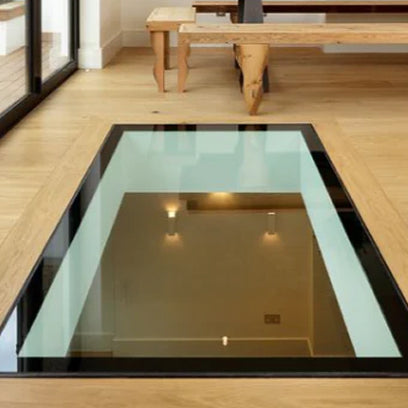
- Versatility: With bespoke options, you can incorporate fire-rated glass into doors, partitions, rooflights, and even fire-rated walk-on glass panels.
Fire-rated glass vs toughened or laminated glass
These types of glass have great benefits, but work across different purposes. Fire-rated glass is engineered to withstand over 870°C and provides between 30 and 120 minutes of protection against smoke. Standard tempered or laminated glass, on the other hand, offers high impact safety features but can only withstand up to 260°C heat. The key differences and applications for each type of glass include:
Fire-rated glass
Contains specialised gel-filled interlayers that absorb heat and prevent smoke and flames from spreading. Typically used for fire doors, escape routes, and partitions, or even fire-rated walk-on glass.
Toughened glass
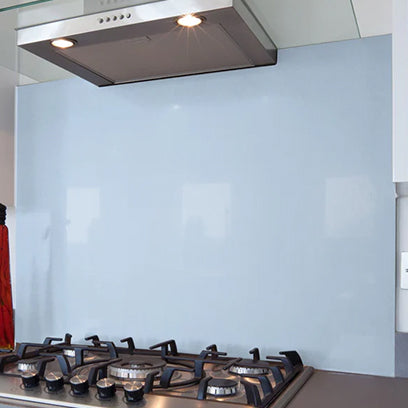
Around 5 times stronger than standard glass and breaks into small, blunt pieces for safety. Commonly used for glass splashbacks, pond glass windows, and glass tabletops.
Laminated glass
Laminated glass is two panes of glass bonded together with a plastic interlayer, which holds the glass in place when it shatters. Typically, this is used for security, noise reduction, and UV protection.
Choosing the right fire-rated glass solution
Selecting the correct fire-rated glazing system requires careful consideration of:
- Building regulations fire glass (30, 60 minutes or higher)
- Location within the building
- Structural or load-bearing requirements
- Framing compatibility
- Building regulations and fire strategy documentation
Architects and contractors should always confirm the required classification (E, EI) before specification. Homeowners undertaking renovations should consult building control or a qualified supplier to ensure compliance.
When you choose a specialist supplier like Bespoke Glass Products, it ensures that the glass is manufactured, tested, and documented correctly for your project.
Explore our range today
Browse our fire-rated glass products today. We offer walk-on fire-resistant glass and a cut to size fire rated glass service. All our products are made to order and have fast lead times, with items dispatched within 10 working days. We have a wide range of bespoke glass products completely tailored to you. If you're ready to make your space safer and more stylish, contact us today.