There are few garden features that command as much attention as a well-designed koi pond. The combination of living colour, movement, and water creates something genuinely alive in the space around it. If you are researching koi pond design ideas for a UK garden, this guide covers the approaches that work best in our climate and the features that take a pond from functional to genuinely impressive.
In-Ground Ponds

The traditional in-ground pond remains the most popular choice, and for good reason. Excavated into the garden, an in-ground pond blends naturally into the landscape and can be shaped to suit almost any space. The key considerations are minimum depth and volume. Koi are substantial fish that produce significant waste, so a pond should be no shallower than 900mm at its deepest point, and most experienced keepers recommend at least 1,500 litres as a starting volume.
Liner-based ponds are the most accessible for self-builders, while concrete or block-built ponds provide a more permanent, professional finish. Block-built construction opens up the possibility of incorporating a viewing window into the side wall, something that is considerably harder to achieve with a liner-based design.
Raised Koi Ponds with Viewing Panels
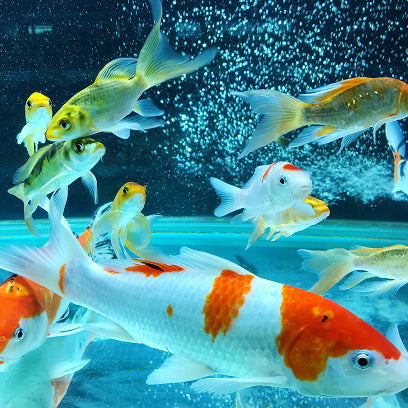
Raised koi pond builds have grown significantly in popularity over the last decade, and much of that comes down to the glass viewing window. A raised structure allows you to position a bespoke glass panel at a height that provides a natural, eye-level view of the koi swimming below the surface. Rather than looking down into murky depths, you see the fish in their full colours against a clear background. Choosing low iron pond glass removes the faint green tint standard glass carries, so those colours read true.
If your koi are known jumpers, a run of pond jump guards around the top edge, held with stainless pond glass fittings, keeps them safely in the water without hiding it behind netting.
Our range of pond glass windows is made to measure, so whether your build calls for a 600mm square panel or a wide panoramic feature, the glass is manufactured to exactly the right specification. Once the panel is specified, our guide on how to install koi pond glass covers the installation stage in full. Choosing the right specification starts with understanding how thick pond glass should be. A raised pond with a viewing window is particularly effective on a terrace or patio where it becomes a centrepiece rather than a background feature.
The Formal Garden Pond

Formal ponds suit gardens with a structured, architectural layout. These designs tend towards geometric shapes, including rectangles, squares, or L-shapes, with clean edges, stone coping, and a considered relationship with the surrounding planting and hard landscaping. Water features such as wall-mounted spitters or central fountains fit naturally into formal designs without disrupting the symmetry.
For koi keeping within a formal layout, it is worth thinking carefully about filtration. The clean lines and open visibility of a formal pond mean that water clarity is paramount. An effective filter system, a UV clarifier, and a regular maintenance routine will keep the water looking as polished as the garden around it. Read our in-depth guide on how to maintain pond glass panels in your koi pond.
How Many Koi Can You Keep in a UK Garden Pond?
The general rule of thumb is one inch of fish per 10 gallons of water, but most experienced koi keepers consider this a bare minimum rather than a target. Koi grow large, with fully mature fish reaching 60-90cm in some cases, so a pond that looks well-stocked with juveniles can quickly become overcrowded as they develop. A more practical guide for a well-filtered pond is to allow around 500 litres of water per koi. Stocking too heavily puts strain on the filter system, reduces dissolved oxygen levels, and leads to poor water quality. Start conservatively, invest in good filtration, and add fish gradually rather than all at once.
Natural and Wildlife-Style Ponds
At the opposite end of the design spectrum, natural ponds with irregular shapes, marginal planting, and a deliberately wild character have a charm of their own. The tension with koi keeping is that koi and wildlife do not always coexist easily. Koi are greedy feeders that will eat frog spawn and aquatic plant growth with enthusiasm. If the goal is to attract wildlife, a separate, shallower wildlife pond alongside a dedicated koi pond often gives the best of both.
A natural-style koi pond can still incorporate a viewing window on a raised section, letting the feature blend into the landscape on the outside while still offering that glass-level viewing experience from the right vantage point.
Japanese Garden Influence

Koi keeping has its roots in Japanese culture, and the Japanese garden aesthetic translates beautifully to the British garden when handled with restraint. Key elements include gravel or crushed slate surfaces, bamboo planting, timber decking or stepping stones, moss-covered rocks, and a water feature that emphasises the calm movement of the fish rather than dramatic splashing.
In a Japanese-influenced design, the pond itself tends to be relatively understated. The planting and hardscaping frame the water rather than competing with it. A simple stone edge, a single specimen tree nearby, and a well-placed lantern can create something genuinely serene.
Filtration and Mechanical Considerations
Whatever the design aesthetic, koi pond filtration is non-negotiable. Koi are far heavier feeders than goldfish and produce proportionally more ammonia. A multi-stage filtration system incorporating mechanical filtration, biological filtration, and UV sterilisation is the standard for any serious koi pond. The filter chamber should be designed into the build from the outset, not added as an afterthought.
Pump sizing, pipe runs, and access for cleaning all need to be considered during the design phase. A beautifully built pond with inadequate filtration will always be a disappointment. Murky water and unhealthy fish undermine every other element of the design.
Installation mistakes are just as costly as design mistakes. Our guide on common mistakes to avoid when installing a pond viewing window covers the ones we see most often.
If you are still deciding on specification, our guides on what type of glass is used for koi pond windows and how much a koi pond glass window costs in the UK cover the two questions most people ask next. Planning a koi pond with a glass viewing panel? See our bespoke pond glass windows, made to your exact specification with nationwide delivery and over 20 years of glass expertise behind every order. For the complete range, viewing windows, low iron panels, jump guards and the fittings that hold them, browse our full pond glass collection.