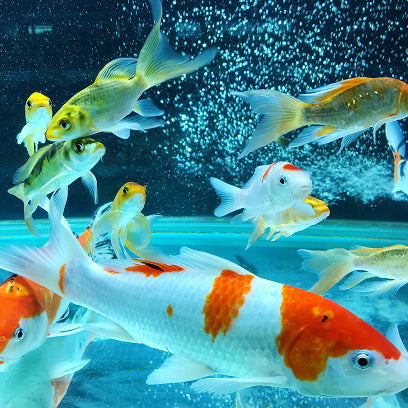
A raised koi pond with a viewing window is one of the most striking features you can add to a garden or outdoor space. Rather than peering down from above, a glass panel built into the side of the pond puts you face to face with your fish. The effect is genuinely spectacular. Whether you are planning a new build or upgrading an existing structure, getting the design and glazing right from the start makes all the difference. If you are still deciding between a raised build and other pond styles, our guide to koi pond design ideas covers the full range of options
Why Build Raised Rather Than In-Ground?

Raised ponds have a number of practical advantages over in-ground designs, particularly when a viewing window is involved. With a raised structure, you have full control over the height of the glass panel, meaning you can position it exactly where viewing is most comfortable. A raised pond also makes it far easier to install the glass correctly, inspect the seals over time, and carry out any future maintenance without excavating the ground around it.
From a design standpoint, raised ponds lend themselves well to terraced gardens, patios, and contemporary landscaping projects. They can be clad in stone, brick, timber, or render, all of which work well as a frame for a flush-set glass panel.
Choosing the Right Glass for the Viewing Window

This is where the build lives or dies. Standard toughened glass is not always sufficient for a pond viewing window, particularly once you factor in the hydrostatic pressure pushing against the panel from the water column behind it. The thicker and taller your pond, the greater that pressure will be.
For most residential raised ponds, the glass should be a minimum of 19mm toughened and laminated. For the clearest possible view with no green tint, specify low iron pond glass. If you are unsure, our guide on how thick pond glass should be explains how thickness is calculated. Laminated glass is critical because if the panel were ever to crack, the laminate interlayer holds everything in place rather than allowing water to breach the structure. At Bespoke Glass Products, all pond glass windows are manufactured to order and specified based on the exact depth and dimensions of your pond, so you never get a panel that is under-engineered for the job.
Do You Need Planning Permission for a Raised Koi Pond?
In most cases, a raised koi pond in a private garden does not require planning permission. Permitted development rights typically cover garden structures of this type, provided the pond is not positioned in front of the principal elevation of the house and does not cover more than half the garden area. That said, there are exceptions. If your property is in a conservation area, is listed, or is subject to specific planning conditions, it is worth checking with your local planning authority before you start. A quick pre-application enquiry costs nothing and can save a lot of trouble later.
Structuring the Surround
The walls of a raised pond need to be capable of carrying both the weight of the water and the lateral pressure it exerts. Blockwork with a reinforced concrete render or a steel-framed construction are both common approaches for larger builds. Timber, while attractive, is generally unsuitable as the primary structure for any pond holding a significant volume of water.
The viewing window opening itself should be formed during the build rather than cut out afterwards. The rebate that holds the glass panel needs precise dimensions, a smooth bearing surface, and adequate depth to allow for correct sealant application on all four sides. Rushing this stage is one of the most common mistakes that leads to leaks later on. Our full installation guide covers each of these stages in more depth.
Installing the Glass Panel
Glass panels of this type should always be installed by someone who understands the loading involved. The panel needs to be set into the opening on setting blocks, with a continuous bead of structural silicone applied to the rebate before the glass goes in. Once positioned, additional silicone is applied to the interior face to create a fully watertight seal. The silicone must be rated for aquatic use and given sufficient cure time before the pond is filled, typically a minimum of 72 hours.
Never be tempted to rush the cure. Water pressure on a partially cured seal is one of the primary causes of viewing window failures.
Depth and Panel Positioning
The viewing window does not have to span the full depth of the pond. Many builders position the panel in the lower half of the structure, where the fish are most active and where the water has the most visual depth. A panel positioned with its top edge 150-200mm below the waterline tends to give the best viewing experience, eliminating the surface glare that can otherwise obscure the view.
Think carefully about external light sources too. A panel facing south or west will catch direct sunlight at certain times of day, which can create strong reflections on the glass. Orienting the viewing face towards the north or east, where light is softer and more diffuse, usually produces a cleaner view.
How Deep Should a Raised Koi Pond Be?
Depth is one of the most important decisions you will make for your koi. The minimum recommended depth for a koi pond is 900mm, but most experienced keepers build to at least 1,200mm. Greater depth gives the fish room to behave naturally, buffers against temperature extremes in winter, and reduces the risk of predation from herons. Fitting pond jump guards around the rim adds another layer of protection, keeping koi in and herons out, secured with corrosion-resistant pond glass fittings. For a raised pond with a viewing window, the depth also determines how much of the fish you will see through the glass, so it is worth getting this right at the design stage rather than wishing later that the walls were higher.
Finishing and Cladding
Once the glass is in and the silicone has cured, the exterior surround can be finished to match the garden aesthetic. The glass face should sit either flush with or very slightly proud of the surrounding cladding material. Avoid any cladding detail that directs water behind the glass panel. It should always be possible for water running down the face of the cladding to drain away from the glass rather than pooling at the base of the seal.
For long-term clarity, keep algae growth in check inside the pond. This matters not just for the health of your koi, but because a film of algae on the inside face of the glass will quickly reduce visibility. A good filter system and UV clarifier are worth including in the pond design from the outset.
Ready to specify the glass for your raised pond? Browse our range of custom-made pond glass windows, manufactured to your exact dimensions with over 20 years of specialist expertise behind every panel.