Most people assume toughened glass is a different material. It is not. It starts as ordinary float glass, the same flat glass used in standard windows. The difference is what gets done to it before it leaves the factory.
What makes toughened glass worth specifying is not just the strength difference. It is that it breaks differently. Ordinary glass breaks into jagged shards. Toughened glass goes into small, blunt pieces. UK building regulations treat the two as categorically different products for exactly that reason.
It is sometimes called tempered glass, a term common in the United States. In the UK, toughened glass is the standard term. It is used across an enormous range of applications, from shower screens and glass table tops to balustrades, glass floors, and structural commercial glazing.
How is toughened glass made?
Before toughening starts, everything that needs to happen to the glass has already happened. Every cut, every drilled hole, every shaped edge and notch. Once the glass comes out of the furnace, it cannot be cut, drilled, or modified in any way. Attempting to do so causes the entire pane to shatter. Not just the area being worked on. The whole thing. This is one of those facts about toughened glass that catches people out, and it is why dimensions and configuration need to be right at the point of ordering toughened glass cut to size.
The toughening process itself is not complicated in principle. The glass goes into a furnace set to between 620°C and 650°C. Close to its softening point, but not quite there. Then it comes out, and cold air hits both surfaces at the same time. That is the quench.
The outer layers cool in seconds. The interior does not. As the core finally contracts, it meets outer surfaces that have already locked into position. The glass ends up in a state of permanent internal conflict: outer surfaces under compression, core under tension. The stored stress does two things. It makes the glass significantly harder to break. And it determines what happens when the glass finally does break.
Heat-strengthened glass is worth knowing about because the two regularly get confused. Same general process, slower cooling rate. The result is roughly twice the strength of standard float glass rather than four to five times. It fractures into larger pieces on failure and does not qualify as safety glass. They look identical. They are not interchangeable.
How strong is toughened glass?
Toughened glass can break. That needs to come first, because the assumption that it cannot leads to poor decisions about specification. It is considerably harder to break than ordinary glass. The relevant UK standard is BS EN 12150. A 6mm toughened pane passes what it requires. A 6mm untreated pane would not get close.
But it does break. And when it does, the way it breaks is the point.
Ordinary glass fractures into long shards. Blade-edged and dangerous if someone falls through them. Toughened glass, because the outer surfaces are held under compression, shatters into small, roughly cubic pieces. Not harmless. But the kind of fragments that cut skin, not the kind that cause injuries requiring surgery. That distinction is why toughened glass carries a safety classification and ordinary float glass does not.
Spontaneous breakage is the one that people find hardest to accept. A toughened pane on a balustrade, above a staircase, in a commercial partition, shatters for no apparent reason. No impact. No warning.
It comes down to nickel sulphide. NiS inclusions are mineral particles present in some float glass, invisible once the glass is manufactured. After toughening, they go through a slow phase change that causes slight expansion inside an already stressed material. The glass fails. It can happen days after installation. It can happen years later.
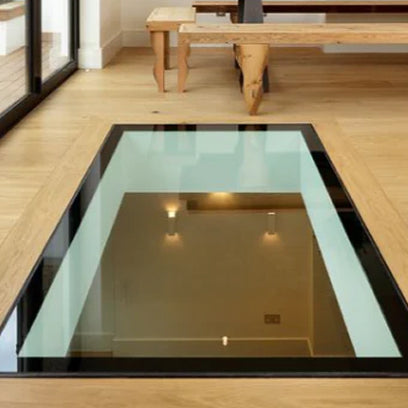
The risk is low. But it is not zero. For overhead glazing, glass floors, and any installation where a spontaneous failure would be dangerous, heat-soaked glass is the right specification. The toughened glass is held at elevated temperature during manufacturing before it ships. Panes with problematic inclusions fail during that process. The ones that pass are significantly less likely to fail in service.
Is toughened glass heat resistant?
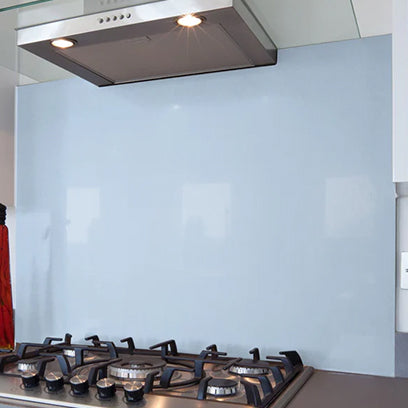
Standard float glass can crack from a temperature differential of 30°C across a single pane. That is not much. A section in direct sunlight next to a section in shade can get there. A splashback panel near a gas hob gets there on a normal Tuesday morning. Toughened glass handles differentials of up to around 200°C, and surface temperatures up to 250°C to 300°C, before the internal stress gets too great.
This is why glass splashbacks behind hobs are toughened. Not because the glass is in a flame. Because the thermal variation between the panel directly above a burner and the panel fifteen centimetres to its left is enough to crack standard glass over time. A properly specified toughened splashback does not crack under cooking heat. It does not haze or discolour under normal use either.
Shower enclosures are another case where thermal performance matters. The heat levels are lower, but the daily combination of steam, temperature cycling, and physical contact rules out standard glass as a practical material.
Heat resistant and fire rated are not the same thing. Toughened glass does not protect against the spread of fire. Under fire conditions, it will still shatter. Glazing in fire doors, protected stairwells, and compartmentation applications requires fire-rated glass. Toughened glass cannot do that job.
What is toughened glass used for?
Where building regulations specify safety glazing, toughened glass is usually the answer. Low-level panels. Glazing in and around doors. Some overhead applications. Approved Document K sets out the specific requirements for UK buildings. But most toughened glass is specified because it is the right material for the job, not because a regulation demands it.
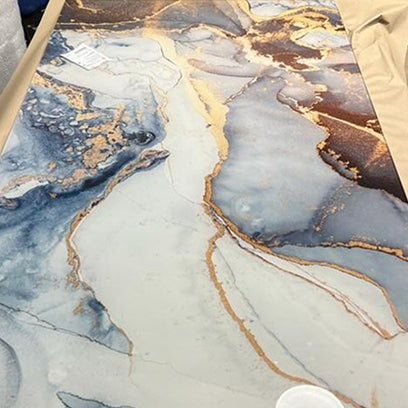
Shower enclosures and balustrades. Glass stairs and floors. Kitchen and bathroom splashbacks, frameless internal doors, glass table tops. These are the most common residential uses. External applications include garden screens, frameless glazed structures, and pool fencing. In commercial settings, shop fronts, glazed partitions, and structural glazing.
Vehicle rear windscreens are toughened glass. The reason a smashed car rear window produces a pile of small cubes rather than a spread of dangerous shards is the same manufacturing process, applied to automotive glass. Most people have seen the aftermath without knowing what caused it.
One practical point: all cutting, drilling, and edge work has to happen before toughening. There are no exceptions, no workarounds, and no way to modify a finished toughened pane on site. Ordering toughened glass cut to size to the correct specification at the point of purchase is the only option. What arrives is finished.