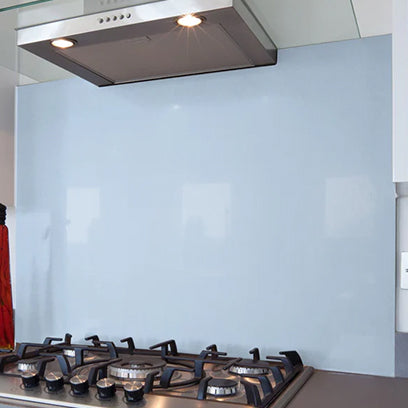
Knowing how to clean a mirror splashback properly is the difference between a kitchen that looks showroom-fresh and one covered in streaks every time you cook. The good news is that it takes about 30 seconds once you have the right approach. Most people just get one or two things wrong that make the whole process harder than it needs to be.
What You Need
Forget the expensive glass cleaning sprays for a moment. The most effective solution for cleaning a mirror splashback is one you can make at home for pennies.
- White vinegar and distilled water, mixed in equal parts in a spray bottle. The vinegar cuts through grease. The distilled water leaves no mineral deposits behind.
- Two clean microfibre cloths. One for wiping, one for buffing. This is the bit most people skip. Using one cloth for both jobs just moves the moisture around.
If you prefer a shop-bought option, any ammonia-free glass cleaner will do the job. Avoid anything with ammonia, bleach, or abrasive particles. These can damage the reflective coating on mirror glass over time.
The Streak-Free Technique
Method matters more than product. You could have the best glass cleaner on the market and still end up with streaks if you are wiping in circles with a tea towel.
Step one. Spray the cleaning solution lightly and evenly across the mirror surface. Do not drench it. A fine mist is all you need.
Step two. Wipe with your first microfibre cloth using an S-shaped motion, working from the top of the panel down to the bottom. Not circles. The S-pattern pulls dirt downward in one pass rather than spreading it across the surface.
Step three. Immediately buff dry with your second, completely dry microfibre cloth. This removes any remaining moisture before it has a chance to evaporate and leave marks.
Dealing with Grease Build-Up
If you cook regularly, the area directly behind your hob will collect a fine layer of grease. On mirror glass, this shows up as a dull film rather than obvious splatter marks. A vinegar solution handles light grease easily, but for heavier build-up, add a single drop of washing-up liquid to warm water and use that as a first pass.
Wipe the greasy area with the soapy water, rinse your cloth, go over it again with plain water, and then finish with the vinegar solution and a dry buff. That two-stage approach shifts even stubborn cooking residue without any harsh scrubbing.
For a broader look at glass care across all finishes including painted, printed, and clear, our guide to cleaning a glass splashback covers the lot.
What Not to Do
Some cleaning habits that work perfectly well on worktops and tiles will damage a mirror splashback. Avoid these.
- Kitchen roll and newspaper. Both leave lint and fibres on mirror glass. Microfibre only.
- Bleach or cream cleaners. Cif, bleach sprays, and anything with gritty particles will scratch or cloud the reflective surface.
- Scraping with a blade. If something is stuck on, soften it with warm soapy water first. Never use a razor blade or metal scraper on mirror glass.
- Dry wiping. Rubbing a dry cloth over a dusty mirror surface creates micro-scratches. Always dampen first.
A Daily Routine That Takes 30 Seconds
The easiest way to keep a mirror splashback looking perfect is to not let grime build up in the first place. A quick wipe with a damp microfibre cloth after cooking, followed by a dry buff, keeps it clear day to day. Save the full vinegar clean for once a week, or whenever you notice the surface starting to look dull.
It is genuinely less maintenance than tiles. No grout to bleach, no textured surface trapping grease, and no regrouting every few years. That is one of the biggest practical advantages of choosing a toughened mirror glass splashback over traditional kitchen surfaces.
Looking for more ways to refresh your kitchen? Take a look at our kitchen splashback ideas for inspiration across the full range.