No. The answer to "can you cut toughened glass?" is no, and there is no workaround. Once glass has been through the toughening furnace, it is a finished product. Cutting it is not possible. Attempting to cut it produces a pile of small granules and an unusable pane.
This is the most important practical fact about toughened glass cut to size. Every dimension, every hole, every shaped edge has to be decided before the order is placed, not after the glass arrives. For more on what toughened glass is and how it is manufactured, see our guide to toughened glass. This post covers the cutting, drilling, and ordering side.
Can Toughened Glass Be Cut to Size?
Yes, but only before it goes into the furnace. Toughened glass cut to size means the panel is cut, drilled and polished to your dimensions first and then toughened, which locks the stress pattern into the finished shape. That's why we ask for every measurement and every hole position at the point of order rather than afterwards. Once a panel is out of the furnace the size it is, is the size it stays. If you're working to a standard thickness, our 6mm toughened glass cut to size covers most domestic jobs.
No glazier can resize toughened glass on site. People assume it is a skill question: that the right technique or better equipment would make it possible. It is not a skill question. The physics of toughened glass makes cutting impossible after the fact, regardless of who is doing it or what they are using.
Toughened glass is a pane held under permanent internal stress. Outer surfaces under compression, core under tension. Those forces sit in equilibrium. Score through the surface, even lightly, and that equilibrium collapses. The stress releases across the entire pane in an instant. What you get is granules. Not a smaller piece that can be used. Not a panel that can be salvaged with a different frame. The whole thing goes.
Diamond blades and angle grinders produce the same result as a simple score. So does slow drilling with water cooling. People try water cooling because they assume heat causes the failure. It does not. The water removes heat. The internal stress pattern is completely unaffected by temperature. The cause of failure is the stress disruption itself, and nothing removes that.
The same applies to edge work. Trimming a millimetre with a grinder. Chipping a corner smooth. Running a file along a side that arrived rough. Every one of these shatters the pane.
The supply chain implication catches people at the wrong moment. You cannot buy a sheet of ordinary glass, have it cut at a merchant, and take it to be toughened afterwards. The glass is cut, drilled, shaped, and edge-finished before it goes into the furnace. Not after. If a site measure turns out to be wrong after the glass has been toughened, there is no correcting it. A replacement has to be ordered.
Can You Drill Holes in Toughened Glass?
Not after toughening. The same thing happens: the drill disrupts the surface stress layer, the pane shatters.
Holes in toughened glass are possible and common. Shower door hinges use them. Balustrade fittings use them. Wall-fixed glass shelves and frameless mirrors use them. But they are drilled before toughening, using specialist equipment, as part of the glass's original specification. They are ordered, not added.
The shape of the hole matters. Holes in toughened glass must be round. Circular holes distribute the stress evenly around the rim. A rectangular or square cut-out does not. The corners concentrate stress, and toughened glass under that kind of localised pressure either fails during manufacture or cracks in service weeks later.
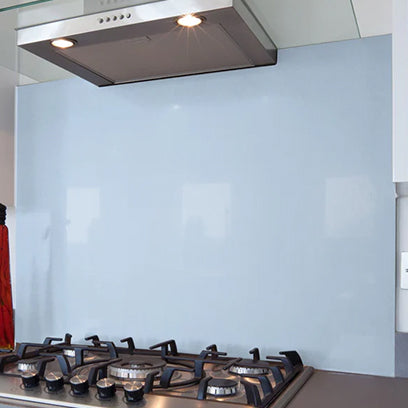
This rules out a very common request: a rectangular hole through a glass splashback for a mains socket or switch plate. A rectangular hole through the main pane is not achievable. The standard approach is a separate smaller panel of glass positioned around the socket, with a narrow gap between the two pieces and trim covering the join. It looks clean when finished. It is the only way to make it work.
Hole positions also carry minimum distance requirements. A hole centre generally needs to sit at least 50mm from any edge, though the exact figure varies with glass thickness and supplier. Closer than that and the stress distribution around the hole creates a failure risk during or after toughening. These distances need to be confirmed when placing the order, not estimated on site.
What Can Be Done To Toughened Glass After Toughening?
More than most people realise, as long as it does not involve removing material or penetrating the glass.
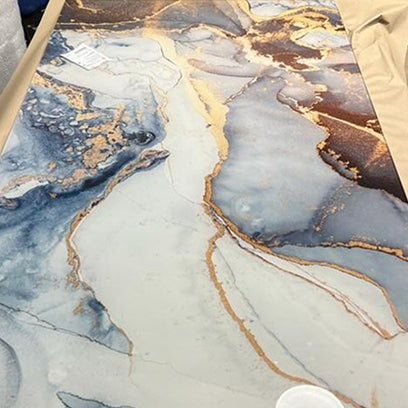
The internal stress runs all the way through the glass. Any treatment that breaks through the surface disrupts it. But treatments that stay on the surface do not. Sandblasting creates a frosted or textured finish without going through the glass, and it is applied after toughening. Sprayed or painted colour on the rear face is standard for coloured splashbacks, applied by the installer after the glass is cut and toughened to the right specification. Privacy film, UV film, decorative vinyl: all of these go on after installation.
What is ruled out is anything that takes material away. Cutting. Drilling. Grinding a chip smooth. Polishing an edge that arrived rough. If a pane arrives on site with a small defect, the answer is to reject the delivery and get a replacement, not to try correcting it on site.
This trips people up. The glass arrives, a corner is slightly off, and the instinct is to trim it. It cannot be done. The pane shatters. A new one has to be ordered, which means another lead time and another delivery. Getting the specification right before the order is placed is the only way to avoid this.
How Do You Order Toughened Glass Cut To Size?
The specification has to be right before the order is placed. Nothing changes after the furnace.
The most common mistake is measuring the frame opening rather than the glass itself. Glass does not fill an opening edge to edge. A fitting gap of around 5-10mm per edge allows for thermal movement and installation tolerance. Measure the glass you need, not the void it goes into. These are different numbers, and getting them wrong means ordering a piece that will not fit.
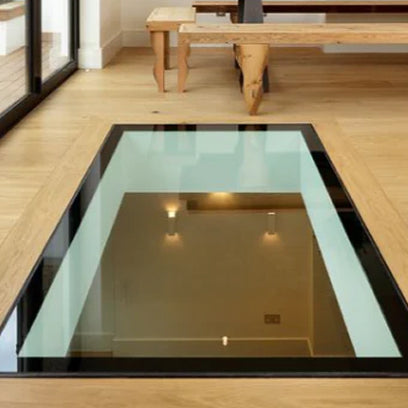
Thickness is not a cosmetic choice. 4mm covers most domestic shelf and cabinet applications. 6mm is better for anything that will be handled regularly or take weight. Structural applications, balustrades, glass floors, screens that take lateral impact, need thickness confirmed against the structural requirements. Choosing a thickness by eye is how people end up with glass that fails inspection.
Edge finish is the detail most often skipped on first orders. Unfinished or seamed edges are sharp. If the edge of the glass will be visible or accessible in the finished installation, specify a polished finish. Flat polished and pencil polished are the standard options.
One point on glass type that matters for certain applications: standard clear float has a faint green tint from the iron content of the glass. On small pieces in most settings it is not noticeable. On a large panel against a white or cream wall it shows clearly. Glass splashbacks in pale kitchens are the most obvious case: standard clear gives the wall behind the glass a greenish cast. Low-iron glass removes the tint. The cost difference is not large, and the colour difference in a finished installation can be significant.
For projects where the glazing falls within a safety-critical location under UK building regulations, the glass also needs to carry the correct safety glass certification. Our post on when safety glass is required covers where those requirements apply.
Ready to order? Our made-to-measure toughened glass is manufactured to your exact specifications, with standard rectangular panels typically dispatched within 5-10 working days. Simply enter your measurements, choose your preferred thickness and finish, and place your order online with confidence.